


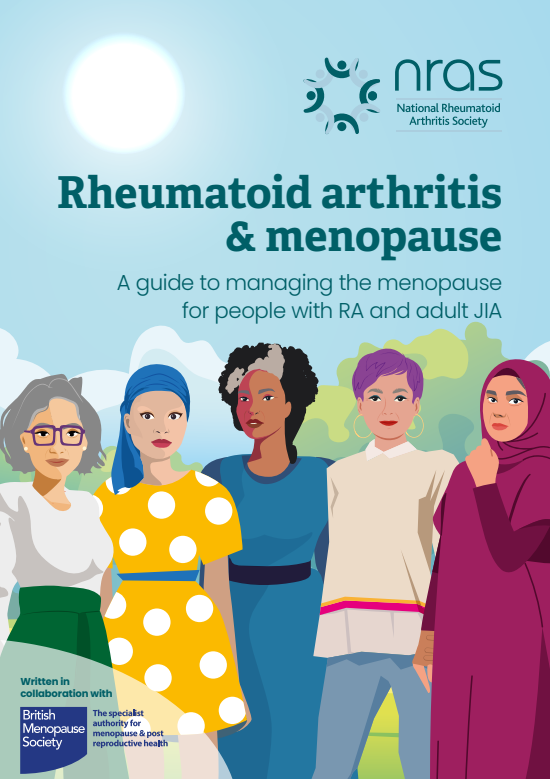
NEW Rheumatoid Arthritis & Menopause Booklet – An NRAS/BMS Collaboration
The National Rheumatoid Arthritis Society (NRAS), together with the British Menopause Society (BMS), has launched a much‑needed new booklet exploring the intersection between rheumatoid arthritis (RA) and the menopause. Developed with the guidance of the BMS medical advisory council and shaped by the wider rheumatology community, this new resource offers clear, evidence‑based information to help women understand the many ways hormonal change can influence their RA, and how to have informed, confident conversations with healthcare teams.
Why This Booklet Matters
Women are significantly more likely to develop rheumatoid arthritis than men - around three times more likely - and research has long shown that hormonal changes can impact inflammatory arthritis. Shifts in hormones throughout life, including adolescence, pregnancy and the menopause, can influence how severe inflammatory arthritis becomes, how it progresses, and even when it begins.
This makes menopause a particularly complex time for women living with RA or other inflammatory conditions. Many symptoms commonly associated with menopause, such as joint stiffness, fatigue, sleep disturbance and mood changes, overlap with symptoms of inflammatory arthritis. During perimenopause, when hormonal changes begin before periods stop, this overlap becomes even more confusing, making it difficult to distinguish between arthritis‑related changes and menopause‑related symptoms.
The new NRAS booklet was created to help women make sense of this overlap. It explores how hormonal changes can influence inflammatory arthritis and provides practical information to help women recognise menopausal symptoms and raise these concerns confidently with their clinicians.

Insights From the 2024 NRAS Study
Publication of the booklet follows a major 2024 NRAS study exploring women's experiences of RA during the menopause. The results exposed a striking gap in clinical communication:
93% of women said no healthcare professional had ever raised the topic with them.
The study also revealed that women struggled with unexpected symptoms. Achy joints (18%), night sweats (70%), and significant social impact (36%) were all commonly reported experiences. Many women in a follow‑up focus group described being unsure whether what they were feeling was due to RA, menopause, or both.
Additional research gathered by NRAS in 2023 deepened the picture: nine in ten women said menopause made their RA symptoms worse or much worse, and more than 90% said the subject had never been discussed in their healthcare appointments. These responses highlighted the urgent need for better guidance - guidance this new booklet now provides.
Although the resource focuses on RA and adult JIA (AJIA), NRAS notes that much of the information may also be helpful for those living with other inflammatory arthritic conditions such as psoriatic or reactive arthritis. In these cases, they encourage women to seek additional advice from the relevant specialist charity.

Support Beyond the Booklet
The project has also sparked the creation of a new NRAS Menopause & RA Online JoinTogether Group, a peer‑support community for women managing both conditions. Alongside the group, NRAS is offering a series of patient and healthcare webinars, all accessible via the NRAS website. These platforms provide additional spaces for shared experience, education, and reassurance.
Why Symptoms Get Confused
It is not surprising that RA and menopause are often muddled together. Women involved in NRAS focus groups described situations where menopausal symptoms were initially attributed to RA, and cases where early RA symptoms were labelled as perimenopause.
Because symptoms overlap, and because some inflammatory arthritis medications cause side effects similar to menopausal symptoms, distinguishing between the two can be difficult without specialist support. NRAS encourages women to speak to their GP or specialist nurse if they believe they are experiencing menopausal changes, and to inform their rheumatology team if these changes appear to be affecting their RA.
The NRAS helpline is also available for personalised support and guidance: 0800 298 7650, or via the online contact form at www.nras.org.uk/helpline.
Understanding the Wider Health Impacts
Bone Health and Osteoporosis
Women with RA are at increased risk of osteoporosis, particularly those who have taken high‑dose steroids over long periods. Lower vitamin D levels, common in people with RA, can increase this risk further. Menopause also accelerates the loss of bone density, meaning women with RA can face a combination of risk factors.
The booklet outlines practical steps to protect bone health, including:
- Regular weightbearing and resistance exercise
- Eating a calcium‑rich, balanced diet
- Maintaining healthy vitamin D levels
- Avoiding smoking and reducing alcohol
- Considering HRT, which can help reduce osteoporosis risk
The Royal Osteoporosis Society (theros.org.uk) offers additional information and guidance.
Cardiovascular Health
RA increases the likelihood of cardiovascular disease (CVD), and menopause adds further risk. Conditions such as heart attack, stroke and angina occur more frequently in people with inflammatory arthritis than in the general population. For this reason, women experiencing perimenopausal symptoms should inform their rheumatology team and allow them to monitor heart health closely alongside their GP.
NRAS’s free SMILE‑RA self‑management programme includes modules on reducing cardiovascular risk.
Closing the Gaps in Healthcare Conversations
One of the most significant findings from NRAS surveys was the absence of menopause discussions in rheumatology clinics. Many women described being passed between specialties with no clear answers. While rheumatology teams are essential for managing RA, they may not always have specialist menopause training.
If you’re unsure who to contact about menopause, NRAS advises raising this at your next appointment. And if you feel your concerns aren’t being fully addressed, asking for a referral to a menopause specialist is entirely appropriate.
The booklet provides a simple three‑step framework to guide conversations:
- Ask and acknowledge – It’s absolutely okay to raise menopausal concerns.
- Assess together – Work with your healthcare team to understand what may be hormonal, RA-related, or both.
- Act and support – Collaborate on a treatment plan, which may include HRT, lifestyle adjustments, or non‑hormonal therapies.


A Major Step Forward in Women’s RA Care
The Rheumatoid Arthritis & Menopause booklet represents an important step in improving understanding, support, and healthcare communication for women managing both conditions. Covering the overlap of symptoms, bone health, cardiovascular risk and treatment options, it empowers women to discuss the menopause as an integral part of their rheumatology care.
The booklet can be downloaded or ordered free of charge from the NRAS website - a valuable resource for anyone seeking clarity during what can be an overwhelming stage of life.
Add comment
Comments